The Great Zimbabwe Ruins (Rediscovered in 1871)
- Location: Zimbabwe, Africa.
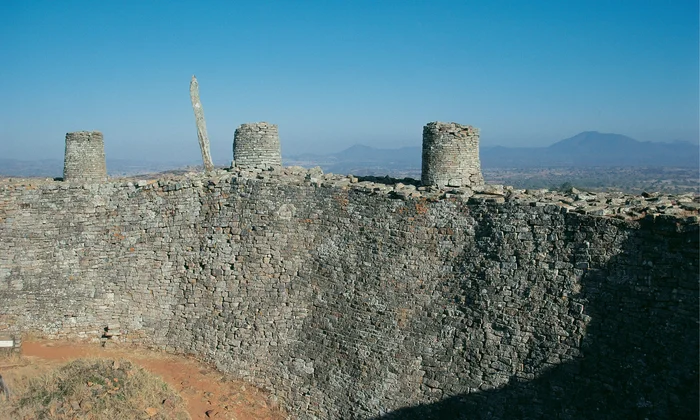
- Findings: A large stone city built between the 11th and 15th centuries, featuring massive dry-stone walls, enclosures, and conical towers. Artifacts include pottery, tools, and gold, showcasing advanced craftsmanship and trade links.
The Great Zimbabwe Ruins: A Monument to Ancient Ingenuity
Hidden in the highlands of modern-day Zimbabwe lies one of Africa’s most remarkable archaeological treasures: the Great Zimbabwe Ruins. This ancient stone city, rediscovered by European explorers in 1871, stands as a testament to the architectural and cultural achievements of the Shona people, who built the site between the 11th and 15th centuries. Its rediscovery sparked widespread interest, as well as controversy, over its origins and significance.
The Great Zimbabwe Ruins cover an area of nearly 800 hectares and consist of three primary complexes: the Hill Complex, the Great Enclosure, and the Valley Ruins. The most iconic feature of the site is the Great Enclosure, a massive stone wall that encircles a series of smaller structures. At its tallest, the wall reaches 11 meters (36 feet) high, and it was constructed without the use of mortar, relying instead on the precise placement of carefully cut granite blocks. This dry-stone construction technique highlights the advanced engineering skills of its builders.
Artifacts found at the site offer a glimpse into the vibrant society that once thrived there. Pottery, iron tools, gold ornaments, and soapstone sculptures—most famously the eight soapstone Zimbabwe Birds—indicate a sophisticated culture with a high degree of craftsmanship. Additionally, evidence of trade with distant regions, including Asia and the Middle East, has been uncovered. Items such as Chinese porcelain and Arab glass beads suggest that Great Zimbabwe was a hub of commerce, connecting southern Africa to a wider network of global trade.
The origins of Great Zimbabwe were initially the subject of contentious debate. Early European explorers and colonial scholars dismissed the idea that the ruins could have been built by African civilizations, attributing them instead to lost ancient cultures such as the Phoenicians, Egyptians, or even King Solomon. These theories were rooted in racist ideologies that underestimated African ingenuity. However, modern archaeological research has definitively established that the ruins were constructed by the ancestors of the Shona people, who developed a powerful kingdom that exerted influence across the region.
Great Zimbabwe likely served as a royal city and center of political, economic, and religious life. The Hill Complex is thought to have been a site of spiritual significance, while the Great Enclosure may have housed royal families or been used for ceremonial purposes. At its peak, the city is believed to have supported a population of up to 18,000 people before being abandoned in the 15th century, likely due to environmental factors such as overgrazing and resource depletion.
Today, the Great Zimbabwe Ruins are a UNESCO World Heritage Site and a source of immense pride for the people of Zimbabwe. The name “Zimbabwe” itself derives from the Shona phrase dzimba dza mabwe, meaning “houses of stone.” The ruins serve as a powerful symbol of Africa’s rich history and the achievements of its indigenous cultures.
As one of the largest and most significant archaeological sites in sub-Saharan Africa, the Great Zimbabwe Ruins continue to inspire fascination and research. They stand not only as a monument to the past but also as a reminder of the resilience, creativity, and complexity of the societies that shaped the continent’s history.

Related Events