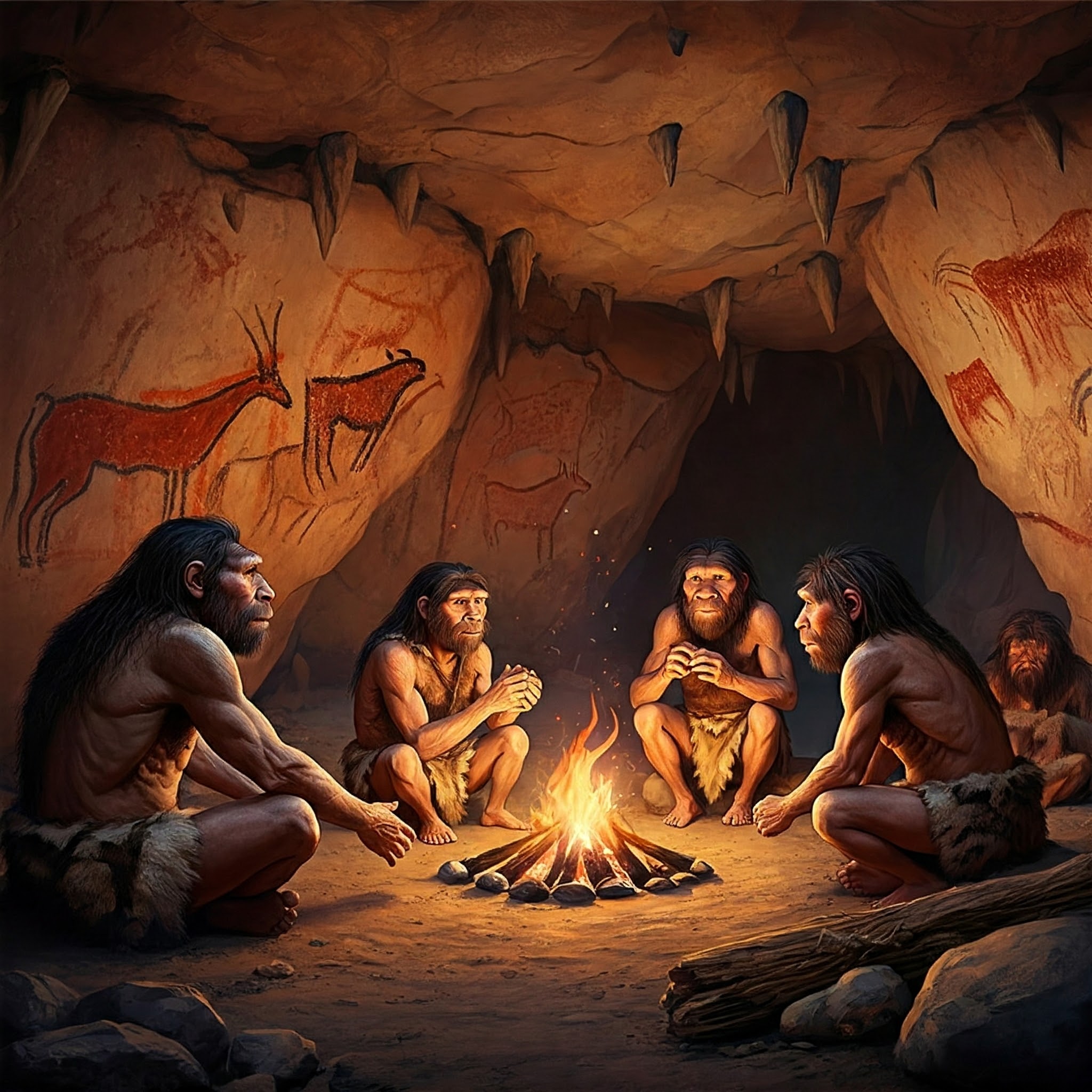
The Neanderthals:
A Glimpse into Their WorldTimeframe and Origins
The Neanderthals (Homo neanderthalensis) emerged approximately 400,000 years ago, evolving in Europe and western Asia. They thrived during the Pleistocene epoch, adapting to a wide range of environments from ice-covered tundras to temperate woodlands. Their lineage overlapped with early modern humans (Homo sapiens) for tens of thousands of years before their eventual decline around 40,000 years ago.

Physical Adaptations
- Robust Build: Stocky and muscular, their bodies were optimized for survival in harsh, cold climates.
- Distinct Features: They had a prominent brow ridge, a wide nose to warm and humidify the air, and a barrel-shaped chest for endurance.
Social Structure and Communities
The Neanderthals lived in small, tightly-knit groups of 10-20 individuals, often extended families. These groups formed the cornerstone of their social lives, fostering collaboration for survival in a challenging environment.
-
Shelters:
Caves provided natural protection, but Neanderthals also constructed temporary shelters using bones, hides, and wooden frameworks. -
Division of Labor:
Tasks were shared based on skills rather than strict hierarchies. Evidence suggests they worked cooperatively during hunts and cared for injured or elderly members. -
Tool Use:
Their Mousterian tools, crafted from flint and stone, were remarkably sophisticated. They used these for hunting, cutting, and preparing food. -
Communication:
Though we lack concrete evidence of complex language, their ability to cooperate and share knowledge indicates some form of verbal or gestural communication.
Cultural Practices and Beliefs
-
Burial and Symbolism:
Neanderthals were among the first species to bury their dead, often with flowers, tools, or animal bones, suggesting a form of ritual or spiritual belief.
They adorned themselves with ornaments made of shells or animal teeth, hinting at symbolic thinking. -
Art and Music:
Evidence of simple carvings and a bone flute shows that Neanderthals engaged in creative expression, a trait shared with modern humans. -
Fire Mastery:
Fire was central to their lives, providing warmth, protection, and the means to cook food, which improved their nutrition.
Wars and Conflicts
While direct evidence of Neanderthal warfare is scarce, competition for resources likely led to occasional conflicts:
- Inter-group Rivalries: Competing for hunting grounds or shelter during harsh winters could have sparked tensions.
- Encounters with Early Humans: The arrival of Homo sapiens, (Elymians?), brought both opportunities for cultural exchange and the risk of territorial disputes.
- Defensive Tactics: Their robust physiques and knowledge of their environment made Neanderthals formidable opponents in defending their communities.
Meeting the Elymians
The arrival of the Elymians during the late Ice Age coincides with a pivotal moment in Neanderthal history:
- Cultural Exchange: The Neanderthals, with their symbolic thinking and survival skills, viewed the Elymians with a mix of awe and caution.
- Adaptation and Coexistence: The Neanderthals' deep connection to Earth’s rhythms provided a unique perspective for the Elymians, while the Elymians’ advanced knowledge might challenge or inspire the Neanderthals’ way of life.
- Conflict or Unity: The interaction could vary from curiosity and collaboration to mistrust and conflict, depending on the circumstances of their meeting.
Legacy of the Neanderthals
Although the Neanderthals eventually disappeared, their legacy lives on. Genetic evidence shows that modern humans carry 1-2% Neanderthal DNA, a testament to interbreeding between the two species. Their resilience, adaptability, and creativity continue to fascinate scientists and storytellers alike.